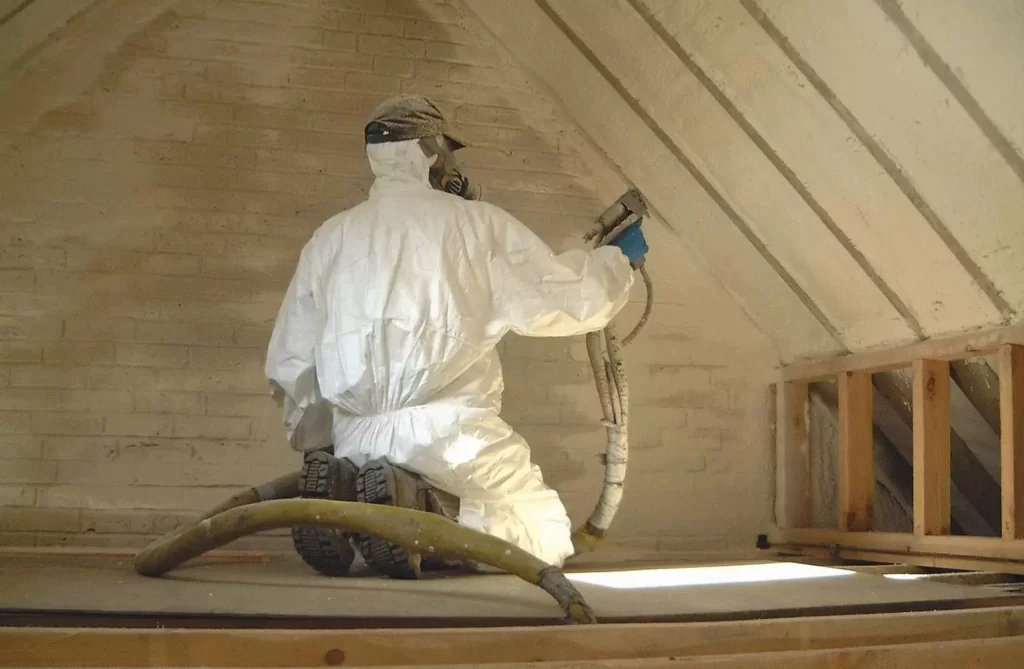
Cool weather does not automatically rule out spray foam work, and a warm truck or room does not guarantee a suitable surface. The product, substrate and conditions during application and curing all matter. For British Columbia projects, crews should use the current instructions for the exact foam system being installed and record the job conditions before spraying.
Check the exact product and its instructions
Different spray polyurethane foam systems can have different requirements for chemical storage, liquid temperature, proportioner and hose settings, substrate conditions, pass thickness and curing. Do not apply one product’s temperature limits to another. Review the current technical data sheet and application guide for the product on site, and contact the manufacturer when the planned conditions fall outside the guidance.
For example, Huntsman Building Solutions publishes separate technical information and application guidance for its Heatlok Soya products. The current documents for the specific version should govern the work; an old job note or a temperature remembered from another system is not a substitute.
Measure the substrate, not just the room
Air temperature can differ from the temperature of roof sheathing, framing, concrete or metal. Measure the actual surfaces that will receive foam and compare them with the product requirements. Check for dew, frost, condensation, dust, oil, loose material or other conditions that can affect adhesion. Wood and concrete should be dry and prepared as the product instructions require.
Do not spray over a wet or frosted surface and expect the foam to correct it. If the substrate is outside the product limits or its condition is uncertain, stop and resolve that condition before proceeding.
Keep conditions steady through application
Temporary heat or hoarding may help, but the enclosure needs to maintain appropriate conditions at the work surface and during the product’s curing period. A quick warm-up of the air may leave the substrate cold. Weather changes, open doors, wind and unheated corners can also create uneven conditions across a project.
Plan enough time for the enclosure and materials to reach the manufacturer’s recommended conditions. Use suitable heating and ventilation equipment under the site safety plan, and monitor more than one location when conditions vary.
Apply in controlled passes
Follow the specified processing settings, lift thickness and cooling or recoat intervals. Applying too much foam in one pass can cause defects or excessive heat inside the material. Before production spraying, verify the equipment is operating correctly and assess the initial foam against the product’s application guidance. Watch for poor adhesion, unusual texture, shrinkage or other signs that require adjustment and review.
Coordinate safety and documentation
Separate the spray area, provide the ventilation and respiratory protection required by the product and job plan, and follow the product-specific curing and re-entry instructions. Keep a record of product identification, ambient and substrate readings, material condition and any adjustments made. This helps the project team understand what conditions were present and why work was continued, paused or rescheduled.
Before a cool-weather spray foam job
- Confirm the exact product version and read its current technical data sheet and application guide.
- Check material conditioning, equipment settings and the manufacturer’s processing guidance.
- Measure the receiving substrate and confirm it is dry, clean and within product limits.
- Maintain the required conditions across the work area and curing period.
- Use controlled passes and document readings, application checks and any stoppages.
Temperature limits are product-specific, so the approved instructions for the foam being installed should guide the decision to proceed. Division 7 Contracting provides spray foam insulation for residential, commercial and industrial projects across British Columbia. Contact Division 7 to discuss your scope and site conditions.
Manufacturer reference: Huntsman Building Solutions Heatlok Soya HP technical library.
Leave a Reply