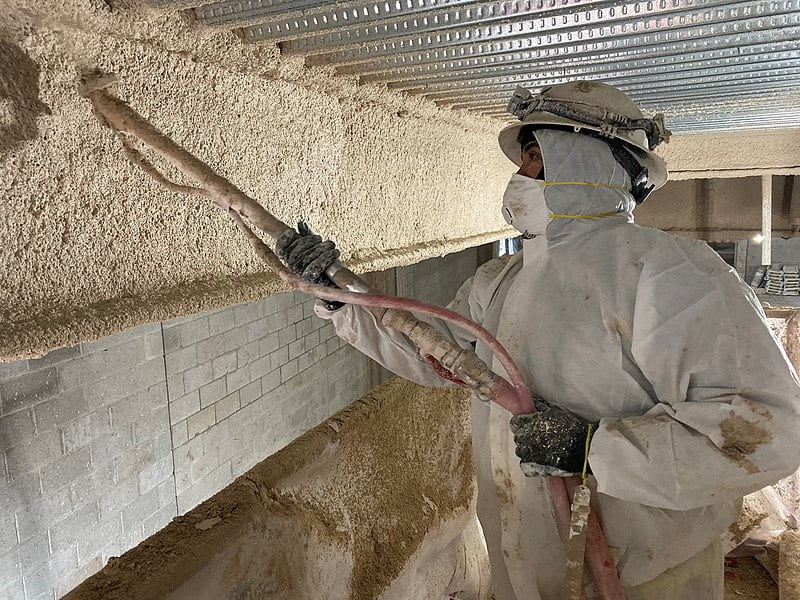
Spray-applied fire-resistive material can be damaged after installation by duct hangers, electrical work, sprinkler piping, drywall framing, lifts and other construction activity. A scrape, missing patch or removed section may leave structural steel without the protection required by the project’s tested assembly. General contractors can reduce rework by controlling access, recording damage and arranging repairs before the steel is concealed.
Why fireproofing damage needs attention
Cementitious fireproofing is installed to a specified thickness and extent based on the approved fire-resistance design. If material is knocked off, cut away or compressed, the remaining protection may no longer match that design. The size of a damaged area does not determine by itself whether it can be ignored. The location, member, required rating, product and repair method all matter.
Do not cover damage with paint, sealant, insulation or a finish material unless that treatment is part of an approved repair. A cosmetic cover does not restore the missing fire-resistive material.
Inspect after nearby trade work
Plan a visual review after mechanical, electrical, plumbing, sprinkler and drywall work near protected steel. Pay particular attention to beam flanges, column corners, connections, deck flutes and congested areas where access equipment or new services may contact the fireproofing.
Look for exposed steel, gouges, cracks, delamination, loose material, wet or deteriorated areas, and locations where fireproofing was intentionally removed to install a support or penetration. Mark each location and photograph it with enough context to identify the structural member.
Separate damage from an installation deficiency
Post-installation damage is different from work that was initially thin, missed or poorly bonded. Before choosing a repair, determine what happened and whether the surrounding material is sound. If the issue appears widespread, involves adhesion or moisture, or raises questions about the original installation, involve the fireproofing contractor, manufacturer, consultant and testing agency as required by the project.
Repairs should use a product and method suitable for the original system and approved design. GCP Applied Technologies identifies its MONOKOTE Patching Compound for damage associated with typical jobsite and renovation activities such as duct hangers, electrical pipes, drywall, sprinklers, heating and ventilation. Product selection still needs to be confirmed for the specific installed system and project requirements.
Prepare the repair area properly
The repair area should be accessible, and nearby work should be complete enough that the patch will not be immediately damaged again. Remove loose or unsound material as directed by the repair instructions without unnecessarily enlarging the area. The exposed substrate and edges of the existing fireproofing must meet the manufacturer’s preparation requirements.
Do not improvise the water ratio, bonding treatment, mixing method or application thickness. Follow the current product data and written repair procedure. Where the repair restores a rated assembly, verify that the finished thickness and coverage meet the approved design and project quality requirements.
Coordinate inspection and closeout
Tell the project’s inspection authority about the repair plan when the specifications or inspection program require it. Keep the area visible until any required review is complete. Record the member location, approximate repair size, product used, date, installer and inspection result.
A simple repair log helps the general contractor confirm that marked deficiencies were corrected before ceilings, walls or services hide them. It also prevents the same location from remaining on multiple deficiency lists.
Fireproofing damage control checklist
- Protect completed fireproofing from lifts, stored materials and ongoing trade work.
- Inspect protected members after nearby mechanical, electrical, sprinkler and drywall activity.
- Photograph and identify every damaged location before repair.
- Confirm the original product, approved design and acceptable repair material.
- Follow the manufacturer’s preparation, mixing and application instructions.
- Verify thickness and coverage, then record the completed repair.
Early coordination is much easier than repairing hidden or inaccessible steel at the end of a project. Division 7 Contracting provides cementitious and intumescent fireproofing services for commercial and industrial projects across British Columbia. Contact Division 7 for pricing, repairs or coordination support.
Manufacturer reference: MONOKOTE Patching Compound product data.
Leave a Reply