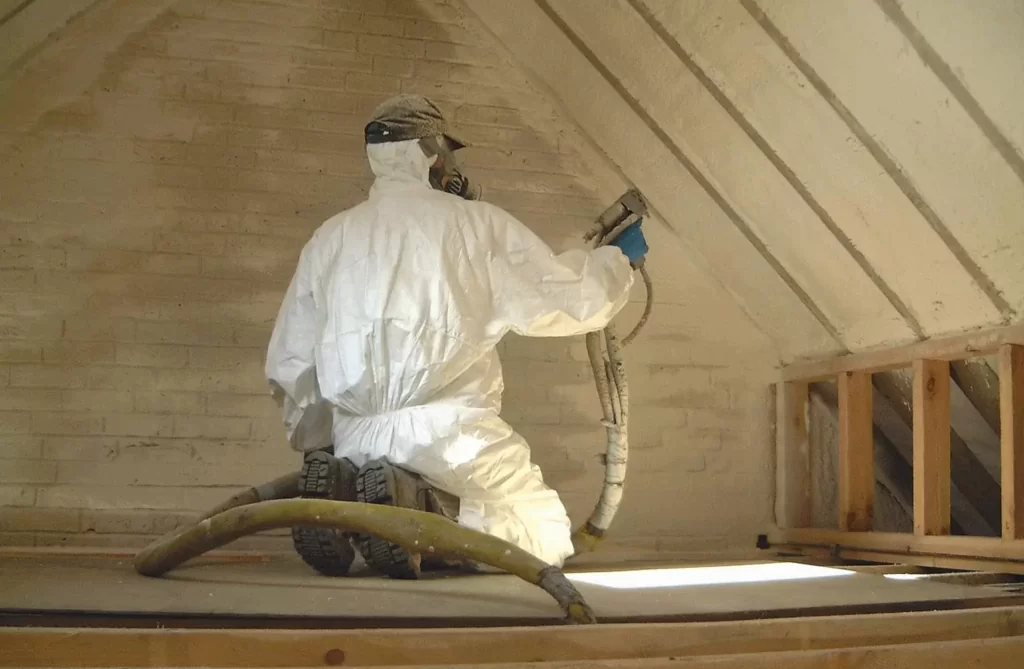
If you notice cold floors and drafts on your main level during damp winter months, your basement rim joists are likely the culprit. The rim joist — the perimeter where your home’s wooden framing sits on top of the concrete foundation — is notoriously prone to air leakage. In British Columbia, the most effective way to insulate and seal this critical junction is with closed-cell spray foam insulation. Unlike traditional fiberglass batts that allow humid air to pass through and condense on cold wood, closed-cell spray foam can provide air-control, vapour-control and thermal benefits when the selected product, assembly and installed thickness suit the conditions.
Why Basement Rim Joists Are A Vulnerable Spot In BC Homes
In Burnaby and the broader Lower Mainland, the combination of heavy rainfall and near-freezing winter temperatures creates challenging conditions for a home’s building envelope. The rim joist area contains numerous joints, seams, and gaps. When the warm, moist air from your heated basement rises and flows outward, it hits the cold wooden rim joist.
If these joists are unsealed, this interaction leads to two significant problems. First, it causes severe heat loss, forcing your heating system to work overtime and creating uncomfortable drafts. Second, it creates the perfect environment for condensation. Moisture buildup on structural framing can eventually cause wood rot, mould growth, and compromised indoor air quality. Properly sealing this area halts this convection loop, keeping the cold out and the conditioned air inside.
Closed-Cell Spray Foam Versus Traditional Insulation
Historically, builders stuffed fiberglass batts into rim joist cavities. However, fiberglass does not stop air movement. Even rigid foam board, while better, requires meticulous cutting and caulking around every perimeter edge to be effective — a time-consuming process that often fails over time as the house settles.
Closed-cell spray foam insulation expands directly into the cavity, adhering aggressively to both the wood framing and the concrete foundation. It fills every crack and crevice, permanently sealing out drafts while providing an impressive thermal resistance value per inch.
Essential Substrate And Moisture Checks
Before any spray foam is applied, the existing rim joist area must be thoroughly evaluated. Spray foam forms an impermeable bond, meaning it should never be applied over wet, rotting, or compromised wood.
If previous fiberglass insulation caused hidden condensation, the wood must be allowed to dry completely. Any signs of active water intrusion from the exterior cladding or foundation must be resolved before the insulation process begins.
Navigating Services, Wires, And Clearances
Rim joist cavities are rarely empty. They are often the primary pathway for the home’s essential services. Professional application requires careful navigation around these obstacles.
Electrical Wires
Do not assume foam can be applied over every cable or electrical component. Follow the product listing and manufacturer instructions, maintain required clearances, and ask a qualified electrician to review uncertain conditions.
Plumbing Pipes
Insulating over water lines in the rim joist cavity actually helps protect them from freezing, provided the pipe remains on the warm side of the main insulation layer.
Combustion Clearances
Strict distance requirements must be maintained around heat-producing fixtures, such as older recessed lighting housings or gas appliance exhaust flues, to ensure safety.
Practical Considerations For Homeowners
Planning for basement rim joist insulation requires a few logistical steps to ensure a smooth project:
- Accessibility: The perimeter of the basement ceiling must be accessible. Drop ceilings need to be temporarily removed, and stored items should be pulled away from the exterior walls.
- Ventilation: Professional installers will set up active ventilation during the spraying process to safely exhaust fumes.
- Curing Time: Occupants and pets typically need to vacate the home during application and for a designated curing period afterward to ensure off-gassing is fully complete and indoor air quality is maintained.
Frequently Asked Questions
Will insulating my rim joists make my floors warmer?
Yes. By stopping cold outside air from infiltrating the floor cavity between the basement and the main level, your floors will retain more ambient heat, dramatically improving indoor comfort.
Does spray foam attract rodents?
Rodents can chew or tunnel through many building materials, including insulation. Foam is not a rodent-control measure; seal entry points and address pest activity before insulating.
Secure Your Home’s Envelope Today
Stop letting your heating budget leak through your basement ceiling. Upgrading your rim joists with professional-grade spray foam insulation creates a more comfortable, durable, and energy-efficient living space. Reach out to the experts to learn how our targeted solutions can improve your home’s overall performance.
Leave a Reply