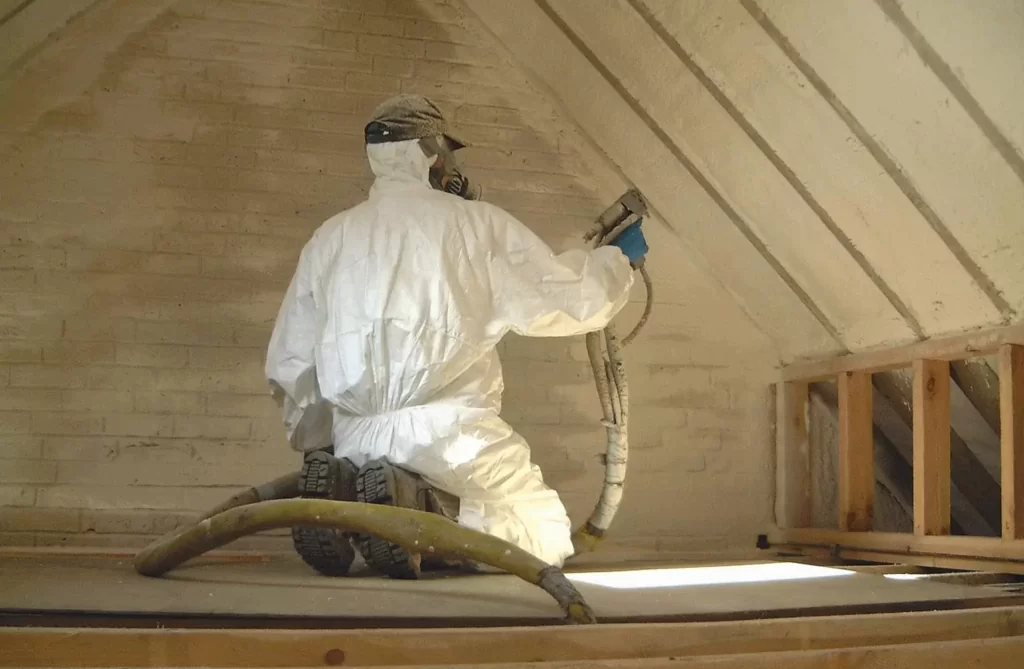
Adding more insulation to an attic can be one of the most effective ways to improve comfort in a BC home, but insulation alone is not always the whole solution. Before topping up an attic with blown-in cellulose or fiberglass, it is worth checking for air leakage between the living space and the attic.
Air sealing and insulation do different jobs. Insulation slows heat flow through the building assembly. Air sealing reduces the uncontrolled movement of indoor and outdoor air through gaps, penetrations, cracks, and openings. When both are addressed together, the attic assembly can perform much better than it would with insulation alone.
Why attic air leaks matter
Warm indoor air naturally finds paths toward colder areas of the building. In winter, gaps around electrical penetrations, plumbing stacks, attic hatches, exhaust ducts, framing joints, and other openings can allow conditioned air to leak into the attic. In summer, hot attic air can also move into the living space through the same pathways.
Those leaks can contribute to uneven room temperatures, drafts, higher heating or cooling demand, and moisture movement into the attic. Adding a thick layer of insulation may slow heat transfer, but it does not automatically stop air from moving through hidden gaps below it.
Common attic leakage points
Every house is different, but several locations are worth inspecting before an insulation top-up:
- Attic access hatches and pull-down stairs
- Plumbing and electrical penetrations
- Wiring holes through top plates
- Bathroom fan and kitchen exhaust penetrations
- Chases and dropped soffits
- Gaps around interior partition top plates
- Openings near chimneys or other heat-producing equipment, where appropriate clearances and approved materials are especially important
A professional insulation contractor should identify where air sealing is practical and where specialized materials or clearances are required.
Air sealing can help insulation perform more consistently
Blown-in insulation works best when it forms a continuous, even thermal layer. If warm air is moving through openings beneath the insulation, some areas can still feel cold or drafty even when the attic has a high nominal R-value.
Sealing obvious leakage points before adding insulation can help reduce these bypasses. It can also make it easier to achieve more even temperatures throughout the home, especially in rooms directly below the attic.
If your attic currently has an older layer of insulation, the existing material does not always need to be removed. In many homes, a properly planned top-up can be installed over existing insulation, provided the attic is dry, clean, and suitable for the work. If there is contamination, moisture damage, pest activity, or other problems, removal may make more sense.
Ventilation still needs to be protected
Air sealing does not mean blocking attic ventilation. Intake and exhaust ventilation still need to function as intended. When blown insulation is added near soffits, baffles and ventilation channels may be needed to keep insulation from obstructing airflow.
This is one reason attic work should be treated as a complete system rather than simply adding more inches of insulation. Air sealing, insulation depth, ventilation, attic access, exhaust ducting, and moisture conditions all need to work together.
When should you consider an attic upgrade?
An attic assessment is worth considering if the upper floor of the home is noticeably colder in winter or hotter in summer, if existing insulation is thin or uneven, if you can feel drafts around ceiling penetrations, or if you are already planning a renovation that exposes part of the attic assembly.
For homeowners in Surrey, Vancouver, Burnaby, the Lower Mainland, and other parts of British Columbia, improving the attic can be an effective way to increase comfort without changing finished interior spaces.
Air sealing and attic insulation from Division 7 Contracting
Division 7 Contracting provides attic insulation, blown-in insulation, spray foam insulation, and related building-envelope services across British Columbia. We can review the existing attic conditions, identify practical air-sealing opportunities, protect ventilation paths, and recommend an insulation approach that fits the building.
Learn more about our spray foam insulation services or contact Division 7 Contracting to discuss an attic insulation project. You can also call 604-728-1687 to request a quote.
Frequently asked questions
Do I need to air seal before adding blown-in insulation?
Not every attic requires extensive air sealing, but sealing obvious leakage points before an insulation top-up can improve comfort and help the insulation perform more effectively.
Can new insulation be installed over old insulation?
Often, yes. If the existing insulation is dry, clean, and in suitable condition, a top-up may be possible. Damaged, contaminated, or moisture-affected insulation may need to be removed first.
Will air sealing stop attic ventilation?
It should not. Air sealing targets uncontrolled leakage from the living space, while attic ventilation needs to remain open and properly protected with baffles or other measures where required.
Leave a Reply