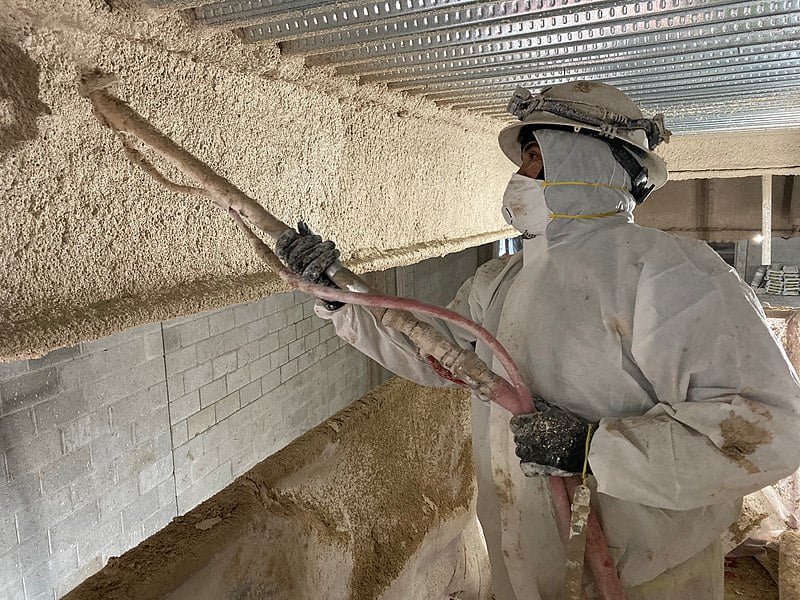
Spray-applied fireproofing can move quickly once a building is ready, but the work depends heavily on what happens before the pump starts. For general contractors and site teams in British Columbia, early coordination can reduce delays, repairs and conflicts with other trades while helping the fireproofing installation follow the specified tested assembly.
Whether the project uses cementitious spray-applied fire-resistive material or another specified system, the product is only one part of the installation. Structural steel condition, access, temperature, water, power, sequencing and protection all affect production and quality.
Confirm the fire-rated assembly before mobilization
The project specifications and applicable listed design should be reviewed before material arrives. The required fire-resistance rating alone does not determine the installation. Member type and size, deck configuration, substrate, primer compatibility and other assembly details can affect the required material and thickness.
Resolving questions before mobilization is much more efficient than stopping work after spraying has started. Submittals, product data and the project’s inspection requirements should also be coordinated early.
Make sure the substrate is ready
Fireproofing needs a suitable substrate. Structural steel and deck should be reviewed for conditions that could interfere with adhesion, including dirt, oil, grease, loose material or incompatible coatings. Where primers are present, compatibility with the specified fireproofing system should be confirmed rather than assumed.
Areas that are not ready can interrupt an otherwise productive spray sequence. A pre-installation walk-through with the relevant project team can identify these issues before the crew and equipment are mobilized.
Plan access and sequencing with other trades
Fireproofing crews need practical access to the steel or deck being protected. Scaffolding, lifts, floor openings, stored materials and active work by mechanical, electrical and other trades can all affect production.
Sequencing matters after application too. Newly installed material can be damaged when other trades install hangers, piping, ductwork or equipment around protected members. Planning fireproofing at the right stage of construction helps limit unnecessary patching and rework.
Coordinate temperature, ventilation, water and power
Jobsite conditions must stay within the requirements of the specified material during application and curing. On BC projects extending into cooler months, temporary heating or enclosure may be necessary. The exact limits should always be taken from the selected manufacturer’s current technical data rather than from a general rule of thumb.
The contractor should also confirm suitable water and electrical service, equipment access and a safe location for material storage and mixing. Ventilation and overspray control need to be considered, particularly when adjacent areas or equipment must remain clean.
Protect completed fireproofing
Fireproofing is a functional life-safety component, not simply a finish. Once installed, it should be protected from impact, water exposure where applicable and damage from subsequent construction activities. If damage occurs, repairs should follow the requirements of the specified system and project documentation.
Good coordination also makes inspection easier. The team should maintain access for required thickness, density, adhesion or other project-specific quality checks without forcing completed work to be disturbed.
Why early coordination helps the schedule
A well-prepared area allows the fireproofing crew to focus on continuous production instead of repeatedly moving around unfinished work. For larger commercial and industrial projects, this can make a meaningful difference to schedule predictability.
Division 7 Contracting provides commercial fireproofing services for projects across British Columbia. If you are preparing a tender, reviewing a fireproofing scope or planning mobilization, contact Division 7 Contracting so the drawings, specifications and site requirements can be reviewed before work begins.
Frequently asked questions
Should fireproofing be installed before mechanical and electrical work?
The best sequence depends on the project, but access to the structural members and protection from later trade damage should be considered when developing the schedule.
Can fireproofing be sprayed over any steel primer?
No assumption should be made. Primer and substrate compatibility should be verified against the specified fireproofing system and listed assembly.
Who determines the required fireproofing thickness?
The required thickness comes from the applicable tested design and project requirements and can vary with the assembly and structural member. It should be confirmed before installation.
Leave a Reply