Box joists and rim joists are easy to overlook because they occupy a relatively small part of a building envelope. Yet these perimeter areas can have an outsized effect on drafts, comfort, and heat loss. In British Columbia homes, especially older houses and renovations, the floor-to-wall connection is often one of the first places worth examining when improving insulation and air sealing.
What are box joists and rim joists?
At the perimeter of a framed floor system, the ends of the floor joists meet the exterior wall. The rim or box-joist area closes this floor cavity around the building. Because it contains numerous joints between wood, concrete, sheathing, pipes, wiring, and other materials, it can be difficult to insulate and air-seal continuously with conventional batt insulation alone.
Small gaps may allow outdoor air to enter the floor cavity or conditioned indoor air to escape. In winter, occupants may notice cold floors or drafts near exterior walls. Air movement can also carry moisture, which is why the assembly should be considered as a complete building-envelope detail rather than simply a cavity that needs insulation.
Why spray foam is useful in these areas
Spray polyurethane foam can conform to irregular surfaces and expand into gaps around framing. When the selected product and installation are appropriate for the assembly, it can provide insulation and air-sealing in one application.
This makes spray foam particularly useful around rim joists, box joists, penetrations, and other locations where fitting rigid insulation or batts tightly around every obstruction can be difficult. The objective is continuity: reducing pathways where air can bypass the insulation layer.
Closed-cell spray foam and thermal performance
Closed-cell spray foam provides relatively high thermal resistance per inch compared with many conventional insulation materials. That can be helpful where cavity depth is limited. It also creates a firm, adhered layer when installed on a suitable, properly prepared substrate.
However, the required thickness should not be guessed. Product specifications, project drawings, applicable requirements, substrate conditions, and the intended assembly all matter. More foam is not automatically better if the installation does not follow the specified system.
Existing conditions should be checked first
Before spraying, the installer should inspect the area for moisture, dirt, oil, loose material, damaged framing, and other conditions that could affect adhesion or conceal a building problem. Plumbing and electrical penetrations also need to be considered, along with any components requiring access or clearance.
On renovation projects, existing insulation may need to be moved or removed so the substrate can be inspected and the foam can bond where intended. Spraying over a problem does not correct the underlying condition.
Where this upgrade can make sense
Rim-joist air sealing is commonly considered during basement renovations, crawl-space upgrades, exterior renovations, and broader energy-efficiency work. It may also be practical when siding or interior finishes are already removed and the perimeter floor assembly is accessible.
For homes in Surrey, Vancouver, Burnaby, and across the Lower Mainland, improving these transition areas can complement attic insulation, wall insulation, and other building-envelope upgrades. The best results come from treating the home as a connected system rather than focusing on one isolated R-value.
Professional spray foam installation
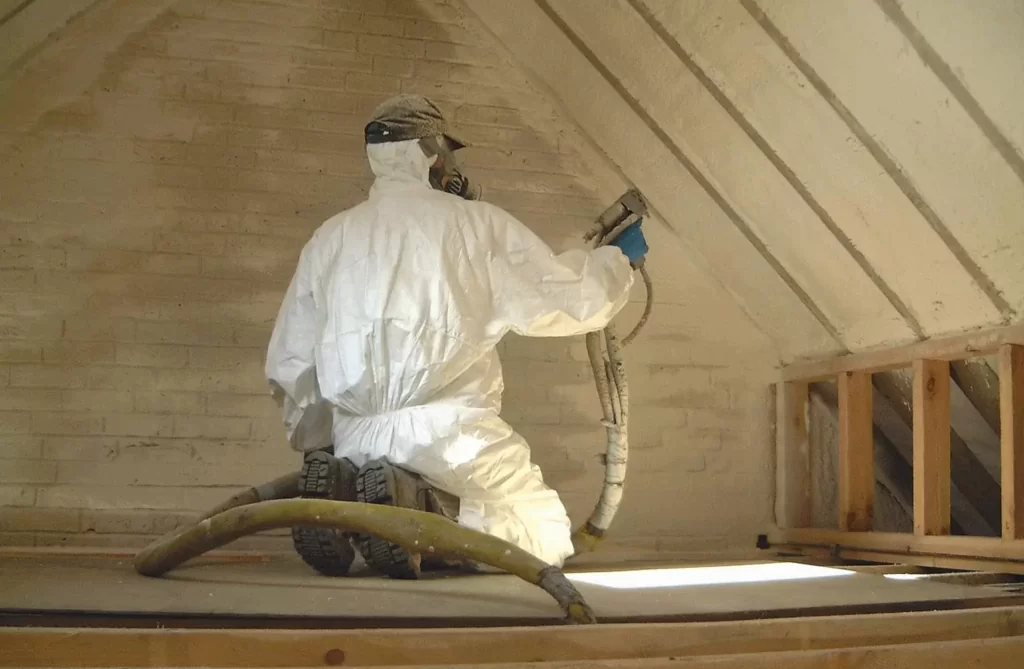
Spray foam is a site-applied product, so workmanship and jobsite conditions matter. Proper proportioning, substrate preparation, application technique, lift thickness, ventilation, and quality control all contribute to the finished installation. The specified foam system should be installed according to its requirements and the project design.
Division 7 Contracting provides spray foam insulation services for residential and commercial projects in British Columbia, including box joists, rim joists, walls, crawl spaces, and other suitable building-envelope applications. For project-specific pricing or to review drawings and insulation requirements, contact Division 7 Contracting.
Frequently asked questions
Can spray foam help with cold floors?
If air leakage or insufficient insulation at the floor perimeter is contributing to the problem, improving the rim-joist area may help. Cold floors can have several causes, so the surrounding assembly should be assessed.
Can spray foam be installed over existing batt insulation?
The intended substrate generally needs to be accessible, suitable, and properly prepared. Existing material may need to be moved or removed before installation.
Is the same spray foam thickness used on every project?
No. Thickness depends on the product, required thermal performance, assembly, specifications, and applicable project requirements. The correct installation should be determined for the specific job.
Leave a Reply