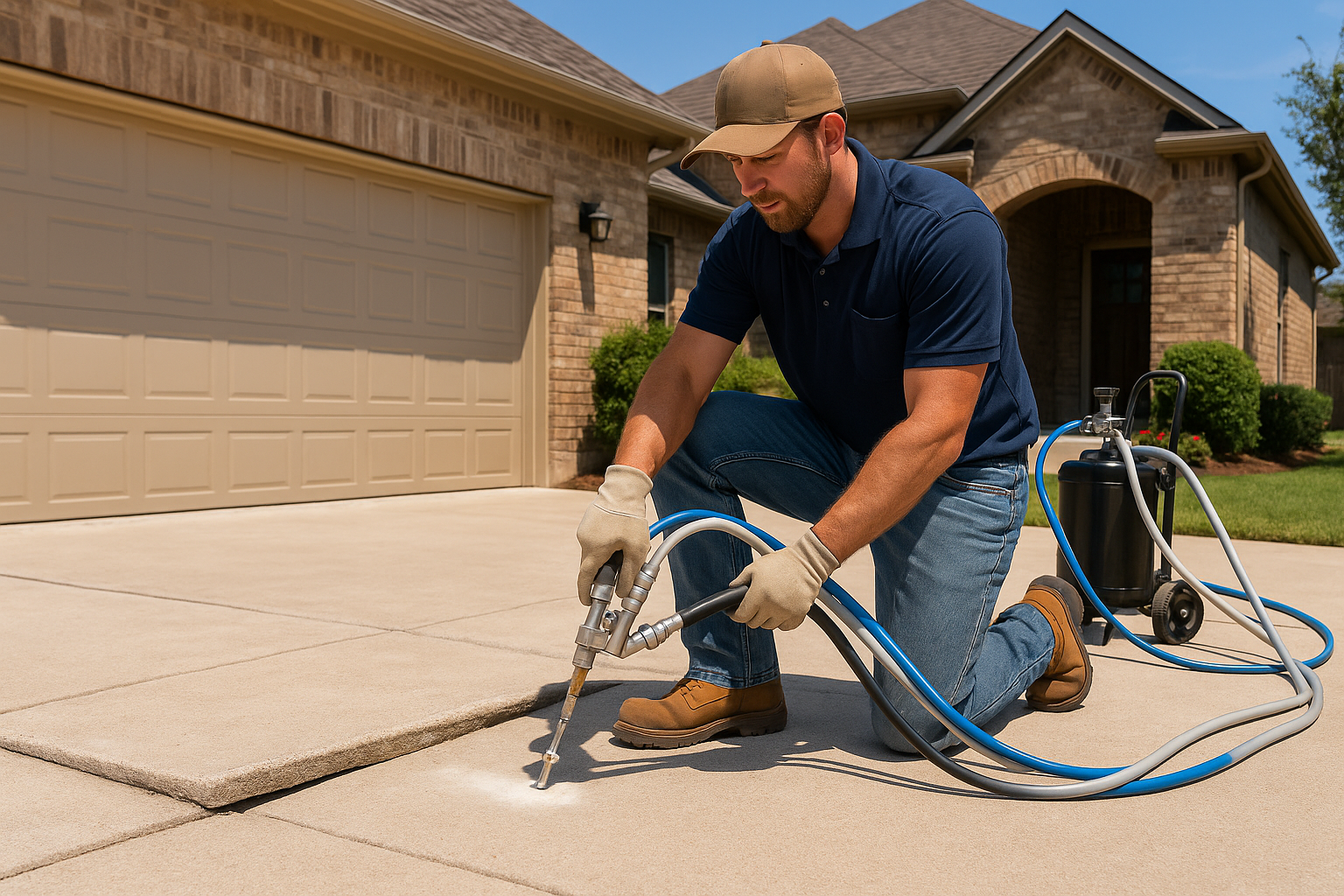
Polyurethane slab jacking, sometimes called concrete lifting, raises a settled slab by injecting expanding foam through small drilled holes beneath it. The foam spreads into available voids and exerts controlled upward pressure. It can be a practical repair for some settled sidewalks, driveways, garage floors and similar slabs, but the right solution depends on why the concrete moved and what lies beneath it.
How the repair works
The contractor first reviews the slab, identifies low areas and checks for cracks, drainage issues, buried services and access constraints. Small injection ports are drilled through the concrete. Foam is injected in stages while elevations are monitored, allowing the crew to lift the slab gradually. After the ports are patched, the surface can often return to service sooner than with full replacement, subject to product and project conditions.
When lifting may be suitable
Lifting may be considered when the slab is generally intact, settlement is localized, and the underlying cause can be managed. Filling a void and restoring a more even surface can reduce trip hazards and improve drainage at the slab. It is often less disruptive than removing and replacing concrete.
It may not be suitable for concrete that is extensively broken, badly deteriorated or moving because of an unresolved structural or drainage problem. Foam cannot repair a failed retaining wall, stabilize every type of soil movement or correct poor site drainage by itself. A contractor should explain what the proposed repair can and cannot address.
Questions to ask before work begins
- What caused the settlement, and is water still washing out or softening the base?
- Is the slab sound enough to lift without causing additional cracking?
- What lift is realistic, and how will elevation be monitored?
- Are utilities or other concealed services in the drilling area?
- How will joints, drainage slopes and the edges of the slab be handled?
- What warranty applies, and what movement is outside its coverage?
Why drainage and expectations matter
Water flowing toward a foundation or pooling beside a slab can contribute to future movement. Correcting downspouts, grading or other drainage issues may be part of a durable repair. Even after a careful lift, a slab may retain some cracks or unevenness, and an exact return to its original elevation may not be possible. The contractor should agree on the target and limitations before starting.
Division 7 Contracting offers concrete lifting and slab jacking services in British Columbia. Share photos and project details through our contact page to discuss whether lifting may fit your concrete repair.
Leave a Reply